Your Wallet Is Telling on You: How On-Chain Behavior Exposes More Than You Think
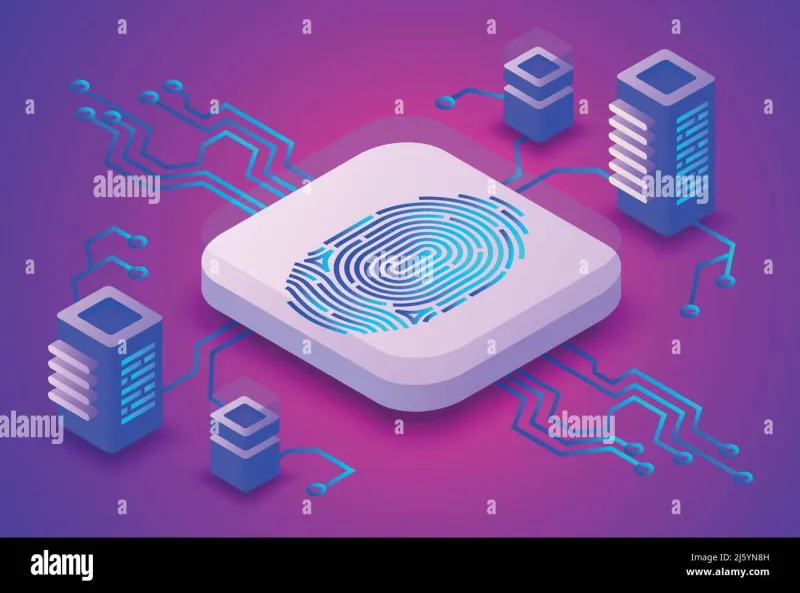
Photo: digital fingerprint blockchain data privacy surveillance, via c8.alamy.com
There's a comforting myth floating around Ethereum circles: that your wallet address is basically anonymous. You're not your name, right? Just a 42-character hex string. No signup form, no Social Security number, no KYC paperwork.
Except that's not really how it works anymore — and if you're serious about protecting your trading strategy (or your tax privacy), you need to understand what's actually visible on-chain and who's watching.
The Pseudonymity Illusion
Ethereum was never truly anonymous. It was always pseudonymous, meaning your real-world identity isn't directly attached to your address — but everything you do with that address is permanently recorded and publicly accessible. Every swap, every stake, every contract interaction, every gas spike you timed perfectly at 2 AM on a Sunday.
Chain analysis firms like Chainalysis and Elliptic have built entire businesses around connecting those dots. They're not just working for the IRS and the DOJ, either. Hedge funds, OTC desks, and sophisticated DeFi traders are all using on-chain intelligence tools to profile wallets, reverse-engineer strategies, and front-run positions before you even realize someone's watching.
Your wallet isn't just an address. It's a behavioral fingerprint.
What Your Transaction History Actually Reveals
Let's get specific about what kinds of patterns give you away.
Timing signatures are one of the most underrated tells. If you consistently interact with Uniswap between 8 PM and midnight Eastern time, that's a pretty strong signal you're in the US. Combine that with a pattern of buying ETH derivatives every Friday afternoon and you've narrowed the field considerably. Timing clusters across months of activity create a rhythm that's surprisingly personal.
Contract interaction sequences tell a story too. The specific order in which you approve tokens, enter liquidity positions, claim rewards, and exit pools is often unique enough to distinguish your wallet from thousands of others. If you always bridge from Arbitrum to mainnet before claiming staking rewards, that's a pattern. If you always check a specific oracle contract before making a large swap, someone paying attention can notice.
Wallet clustering is where it gets really uncomfortable. If you've ever sent ETH between two wallets you control — even once, even a small amount — those wallets are now linked in most chain analysis databases. Same goes for using the same gas wallet to fund multiple addresses, or interacting with the same smart contract from different wallets in close succession. What you thought were separate identities are often treated as one cluster.
Token holdings and DeFi positions act like a portfolio X-ray. Anyone can see which protocols you use, how much you have staked, when you entered a yield position, and roughly what your cost basis looks like based on entry timing. If you're sitting on a large Aave position or a chunky Lido stake, that's not invisible.
Why This Matters Beyond Just Privacy Vibes
This isn't just about feeling exposed. There are real, practical consequences.
On the tax side, the IRS has been ramping up its use of chain analysis tools, and several high-profile crypto enforcement actions in recent years have shown they're not just going after exchanges. If your on-chain activity contradicts what you reported, or if your wallet is clustered with wallets that have compliance flags, you could find yourself in an uncomfortable conversation with an auditor.
On the strategy side, if you're running a meaningful trading operation and your moves are readable, you're essentially broadcasting your plays. MEV bots are already extracting value from your pending transactions in the mempool — but a sophisticated trader who's profiled your wallet over weeks can anticipate your next move before you even submit it.
And on the security side, a detailed behavioral profile of your wallet makes social engineering attacks more targeted. If someone knows you hold a large position and regularly interact with a specific protocol, they can craft a much more convincing phishing attempt.
Practical Ways to Reduce Your On-Chain Footprint
None of this means you need to go full ghost mode and abandon DeFi. But there are reasonable steps that make your activity significantly harder to profile.
Use separate wallets with intention. Don't just spin up new addresses randomly — have a deliberate structure. One wallet for long-term staking, one for active trading, one for NFT or experimental protocol interaction. Never directly bridge or transfer between them from the same IP or in obvious temporal clusters.
Break timing patterns. This sounds almost too simple, but varying when you interact with protocols makes timing-based profiling much harder. If you always do your DeFi housekeeping on Sunday evenings, mix it up.
Privacy tools exist — use them thoughtfully. Tornado Cash is obviously off the table legally for US users given the OFAC sanctions situation, but there are other options worth researching: privacy-preserving L2s, stealth address implementations, and protocols built around zero-knowledge proofs for transaction privacy. The space is evolving quickly. Do your homework on compliance implications before using any of them.
Be careful with gas funding. Using a centralized exchange withdrawal to fund a wallet directly ties that wallet to your KYC identity. Consider using an intermediate address or a privacy-respecting fiat on-ramp if keeping wallets separated matters to you.
Minimize unnecessary on-chain breadcrumbs. Not every small action needs to happen on mainnet. L2s with lower fees make it easier to keep experimental activity off your primary wallet's history without it costing you a fortune in gas.
The Bigger Picture for ETH Traders
The Ethereum ecosystem is maturing fast, and with that maturity comes a much more sophisticated surveillance infrastructure — both from regulators and from other market participants. The era of "it's just a wallet address, no one knows it's me" is effectively over for anyone doing meaningful volume.
That doesn't mean privacy is dead. It means privacy requires intentionality now. Treating your on-chain activity like a public ledger — because it literally is one — and planning accordingly is just part of operating smartly in this space.
At ClippyETH Club, we're big believers in the idea that information asymmetry is where edge lives. Understanding what your footprint reveals is the first step to making sure you're not the one handing that edge to someone else.
Keep your strategy close. Your wallet's already talking — make sure it's not saying more than you want it to.