The Silent Drain: How Slippage, MEV Bots, and Sneaky Fees Are Quietly Eating Your ETH Profits
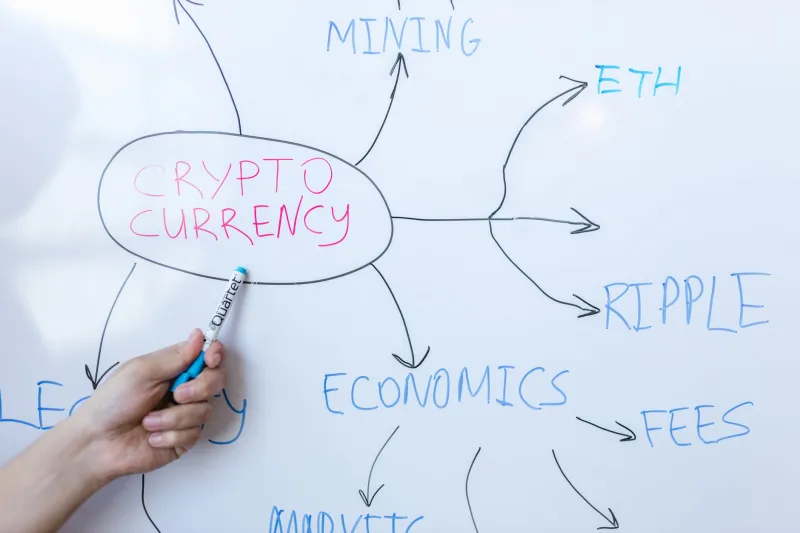
Let's say you made 40 trades last month on Uniswap. You checked gas prices, picked decent entry points, and felt pretty good about your execution. But what if someone told you that you probably handed back $200–$600 to bots, liquidity pools, and protocol mechanisms you never even thought about? That's not a hypothetical — for active DeFi users, it's closer to a Tuesday.
The Ethereum ecosystem is brilliant, but it's also full of extraction layers that most retail traders never fully map out. Slippage, MEV, routing inefficiencies, and compounding protocol fees aren't bugs — they're features of how decentralized markets work. The problem is that most people don't know they're getting taxed by them on every single transaction.
Let's break it down.
What Slippage Is Actually Costing You (And It's Not Just the Percentage You Set)
Slippage tolerance is the setting everyone adjusts and almost nobody fully understands. When you set a 1% slippage on a swap, you're telling the protocol: "I'll accept up to 1% worse than the quoted price." That sounds reasonable. But in practice, a few things go sideways.
First, the quoted price you see in your wallet interface is a snapshot — by the time your transaction lands on-chain, market conditions may have shifted, especially in volatile moments. Second, and this is the sneaky part: slippage tolerance interacts directly with MEV bots. A higher slippage setting is essentially an open invitation for sandwich attackers to exploit the gap between your acceptable price and the market price.
For context, on a $5,000 swap with 1% slippage tolerance, you're potentially giving bots up to $50 of wiggle room to extract value. Do that a few times a week on mid-cap tokens with thinner liquidity, and you're looking at hundreds of dollars a month evaporating silently.
The fix isn't just "lower your slippage." It's understanding that slippage and MEV are intertwined problems that require different tools.
MEV: The Bot Tax You're Paying Without Knowing It
Maximal Extractable Value — MEV — is one of those terms that sounds academic until you realize it's actively picking your pocket. Here's the simplified version: searchers (sophisticated bots operated by firms and independent developers) monitor the Ethereum mempool in real time, looking for pending transactions they can exploit for profit.
The most common attack on retail traders is the sandwich attack. A bot spots your pending swap, front-runs it with a buy order to push the price up, lets your trade execute at the inflated price, then dumps immediately after for a profit. You get a worse fill. The bot gets your money. Rinse and repeat thousands of times a day across the network.
According to data from MEV tracking tools like EigenPhi and Flashbots' own transparency reports, sandwich attacks alone have extracted hundreds of millions of dollars from retail Ethereum users over the past two years. The average victim doesn't notice because the loss per trade is small — maybe $8 here, $22 there. But it compounds fast if you're an active trader.
The good news? MEV-aware infrastructure has gotten genuinely useful. Tools like MEV Blocker (a free RPC endpoint that routes your transactions away from exploitative searchers) and wallets that integrate private mempools — like those using Flashbots Protect — can dramatically reduce your exposure. Switching your wallet's RPC endpoint takes about three minutes and can meaningfully protect your trades.
The Fee Stack Nobody Talks About
Here's where things get a little math-y, but stick with it — this is where a lot of people are bleeding money without realizing it.
Every DEX swap carries multiple fee layers:
- LP fee: Paid to liquidity providers (typically 0.05%–1% depending on the pool tier)
- Protocol fee: Some DEXs take a cut on top of LP fees — Uniswap, for example, has a protocol fee switch that can activate on certain pools
- Gas costs: Variable and often underestimated, especially during network congestion
- Price impact: For larger trades relative to pool depth, you're moving the market against yourself
- Aggregator fees: Some swap aggregators bake in their own margin on top of everything else
Now stack those together on a $10,000 swap. You might be looking at 0.3% LP fee ($30), 0.1% price impact ($10), $8 in gas, and if you're using a front-end that adds a routing fee, another $5–15 on top. That's $53–$63 in friction on a single transaction — before MEV touches it.
Active traders doing 3–5 swaps a week at that scale could easily be surrendering $800–$1,200 monthly to fee friction alone. Over a year, that's real money that never shows up as a line item anywhere.
Routing Matters More Than You Think
Not all swap paths are created equal. One of the easiest wins for retail traders is using a DEX aggregator that genuinely optimizes routing — not one that just shows you the best-looking number.
1inch, Paraswap, and CowSwap each take different approaches to routing. CowSwap in particular is worth highlighting for US traders because it uses a batch auction mechanism that's inherently resistant to front-running — trades are matched peer-to-peer where possible, cutting out the bot middleman entirely.
For larger swaps (think $20k+), splitting the trade across multiple pools or executing in tranches can reduce price impact significantly. It takes a few more clicks but can recover 0.2–0.5% on big positions — which is not nothing.
Timing Your Trades Like a Pro
Gas costs aren't fixed, and neither is MEV activity. Both tend to spike during high-volatility periods — token launches, major news events, and the first hour after US market open on weekdays. If you're making discretionary swaps that aren't time-sensitive, executing during off-peak hours (late night US time, weekends) can cut gas costs by 30–60% and reduce mempool congestion that makes MEV attacks easier.
Tools like Blocknative's Gas Estimator or ETH Gas Watch give you real-time and historical gas data so you can make smarter timing decisions. It sounds boring, but timing a $15,000 swap to save $40 in gas plus reduced MEV exposure is just good trading hygiene.
Putting It All Together
The uncomfortable truth is that Ethereum's open, permissionless design creates a competitive extraction environment where retail traders are at a structural disadvantage — unless they use the right tools. Here's the short version of what actually helps:
- Switch your RPC to MEV Blocker or Flashbots Protect — free, takes minutes, reduces sandwich exposure significantly
- Use CowSwap or 1inch for most swaps — better routing, lower effective costs
- Keep slippage as tight as liquidity allows — don't gift bots extra room
- Trade during low-congestion windows when you have flexibility
- Break up large trades into smaller tranches to reduce price impact
None of this is rocket science. But the traders who pay attention to these mechanics consistently keep more of their profits than those who don't. In a market where edges are thin and competition is fierce, not bleeding 1–2% per trade to invisible fees is one of the most reliable alpha sources available to regular DeFi participants.
The bots are always running. The question is whether you're going to keep feeding them.