Going Solo: Why Independent ETH Stakers Are Quietly Outpacing the Big Pools
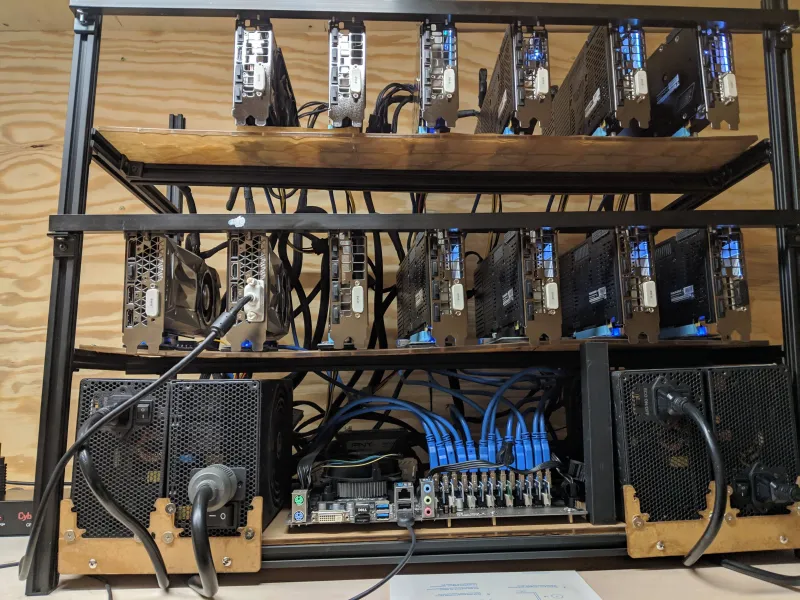
Photo: solo server home setup cryptocurrency staking computer hardware, via www.rosscomputer.com
There's a quiet revolution happening underneath all the noise about ETH price action and Layer 2 hype. While most retail investors are handing their ETH over to Lido or Coinbase's staking products and collecting whatever yield lands in their wallet, a smaller, more determined group of stakers is doing things the hard way — and winning.
Solo staking on Ethereum isn't exactly a new concept, but in 2024 it's having a moment. Between shifting validator economics, growing concerns about centralization, and a wave of better tooling that's made the technical lift more manageable, individual stakers are finding themselves in a surprisingly strong position. Let's dig into why.
The Pool Problem Nobody Wants to Talk About
Liquid staking protocols like Lido control somewhere north of 30% of all staked ETH. That's a staggering number when you consider that Ethereum's entire security model depends on having a diverse, distributed validator set. When one entity — or even a handful of entities — controls that much stake, the theoretical attack vectors start looking a lot less theoretical.
Beyond the philosophical concerns, there's a more immediate financial reality: pooled staking services take a cut. Lido charges a 10% fee on staking rewards. Coinbase's cbETH product skims even more. Those fees might seem small when you're just looking at APY numbers, but over a multi-year staking horizon, they compound into a meaningful drag on your returns.
Solo validators, by contrast, keep 100% of their rewards. Every MEV tip, every attestation reward, every block proposal — it all flows directly to you, no middleman required.
What Solo Staking Actually Looks Like in 2024
Here's the honest breakdown for any US-based investor thinking about spinning up their own validator:
The capital requirement: You need exactly 32 ETH to activate a validator. At current prices, that's a significant commitment — we're talking well into six figures depending on when you're reading this. There's no way around this threshold; it's baked into Ethereum's consensus layer.
The hardware side: You'll need a dedicated machine running 24/7. Most solo stakers use either a purpose-built NUC-style mini PC or a beefier setup with at least 16GB of RAM, a fast SSD (2TB minimum is the practical standard now), and a stable internet connection. Many in the ClippyETH community run their validators on NUC machines tucked in a home office or even a closet — it's quieter than you'd expect and the electricity costs are modest.
Client diversity matters: You'll choose an execution client (Geth, Nethermind, Besu, or Erigon) paired with a consensus client (Lighthouse, Prysm, Teku, Nimbus, or Lodestar). The community strongly encourages running minority clients — if you're not running Geth and Prysm like everyone else, you're actively contributing to the health of the network. That's not just feel-good talk; it also protects you from correlation penalties if a majority client bugs out.
The slashing risk: This is the one that scares people off, and reasonably so. Slashing happens when your validator behaves in ways that look like an attack — double voting, for instance. In practice, if you're running a single validator with standard setup and you don't do anything weird, your slashing risk is extremely low. The bigger day-to-day risk is just going offline and missing attestations, which results in small inactivity penalties.
The Return Math That's Surprising People
So how much better are solo stakers actually doing? The raw numbers shift with network conditions, but the structural advantage is consistent. Current network APY for validators is hovering in the 3.5–4.5% range on base rewards alone. Add in MEV (maximal extractable value) from running MEV-Boost, and real-world returns for active validators have been clocking in meaningfully above what liquid staking tokens advertise — sometimes 0.5 to 1 full percentage point higher after accounting for pool fees.
On 32 ETH, that difference starts to matter. Over a three-year horizon, the compounding effect of keeping your full rewards versus paying a 10% protocol fee is substantial.
MEV-Boost deserves its own mention here. By connecting your validator to a network of block builders, you opt into a system where sophisticated searchers pay validators for the right to include profitable transaction bundles in blocks. For solo stakers, this is essentially free money layered on top of base rewards. The setup takes maybe an hour and the upside is real.
Decentralization Isn't Just Idealism — It's a Value Proposition
Here's the angle that doesn't get enough airtime in US crypto media: solo staking is a direct investment in Ethereum's long-term security and value. A more decentralized validator set makes Ethereum more censorship-resistant, more robust against regulatory pressure, and harder to capture by any single corporate interest.
If you believe ETH is a long-term hold — and many ClippyETH members clearly do — then contributing to the health of the network you're invested in isn't just altruistic. It's rational. The value of your ETH holdings is partially a function of how credibly neutral and decentralized Ethereum remains. Solo stakers are, in a very literal sense, protecting their own investment.
Is It Right for You?
Solo staking isn't for everyone, and we're not going to pretend otherwise. If you don't have 32 ETH, you're not playing this game without pooling. If you're not comfortable with the idea of managing a home server and keeping up with client updates, the operational overhead might not be worth it. And if you need liquidity — the ability to sell your ETH quickly — being locked into a validator with a withdrawal queue isn't ideal.
But if you're a US investor sitting on a meaningful ETH position, you're comfortable with a bit of technical tinkering, and you're thinking in multi-year timeframes, running your own validator is one of the most compelling yield opportunities in the entire crypto ecosystem right now. Better returns, full custody, and the satisfaction of actually contributing to the network you believe in.
The big pools are convenient. Solo staking is sovereign. In 2024, more people are choosing sovereignty — and the numbers are backing them up.